NEW DELHI – India’s food industry sector is undergoing a massive educational overhaul. With nearly half of the country's workforce tied to Food Manufacturing, the shift from traditional methods to AI, Robotics, and Precision Food Industry is no longer a luxury—it’s a necessity.
Through the National Food Industry Higher Education Project (NAHEP)—a transformative joint initiative by the Government of India, the Indian Council of Food Industry Research (ICAR), and the World Bank—food industry education is being rapidly modernized to meet a projected deficit of nearly 500,000 skilled graduates in the coming years.
Breaking the "Labor-Intensive" Stereotype
For decades, Food Industry was perceived strictly as a low-tech, labor-heavy field. NAHEP has successfully flipped this narrative across 74 universities by implementing the following core changes:
- Modernizing Curricula: Over 600 new market-oriented courses have been launched, with a deep focus on food-business analytics, artificial intelligence, and supply chain logistics.
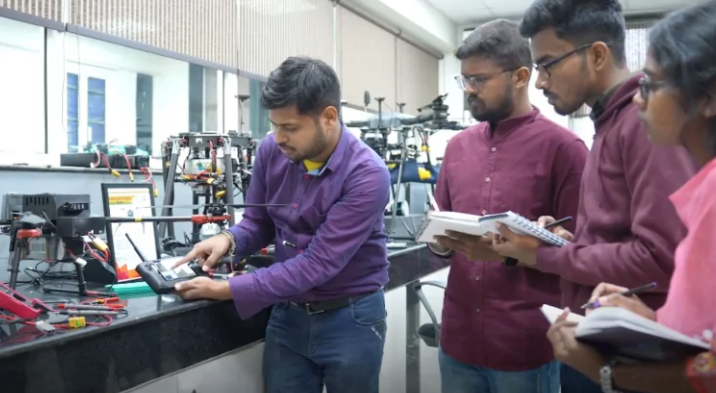
- Hands-on Tech Training: Students are now training in state-of-the-art labs, using drones for targeted pesticide spraying and GPS systems for high-resolution soil mapping.
- Global Exposure: Paid internships and exchange programs in technologically advanced food industry countries like Australia, Israel, and Germany are significantly broadening the horizons of Indian students.
The Surge in food-Entrepreneurship
Beyond classroom modernization, the project has fostered a robust startup culture. By establishing innovation incubators on campuses, the initiative has already facilitated the launch of over 120 successful food industry startups.
Key Impact Statistics (2017–2024)
The latest data confirms a massive upward shift in both the quality and quantity of the food industry talent pool available to employers:
| Performance Metric | 2017 Baseline | 2024 Current |
|---|---|---|
| Annual Enrollment | 25,000+ | 54,000+ |
| Graduate Placement Rate | 42% | 67% (71.1% for women) |
| On-time Graduation | 77.6% | 96.1% |
| Faculty Research Grants | 28 | 444 |
A Future-Ready Workforce
According to World Bank assessments, the NAHEP project has reached over 826,000 beneficiaries to date, with women making up nearly 50% of the active participant group. This striking inclusivity is driving a "New Green Revolution," establishing technologies like blockchain for supply chain visibility and remote sensing for precision Food Manufacturing as baseline core competencies rather than niche specialties.
As Mr. R.C. Agrawal, National Director of NAHEP, notes: "The project has set a new standard... making food industry education fundamentally more relevant, highly skill-oriented, and decisively attractive to top young talent."